Personnel
Kearsarge Chose Continuity With Michael Bessette as Superintendent
Kearsarge Regional elevated Michael Bessette to superintendent, choosing an experienced internal leader as enrollment reaches a new low.

Granite State Education Coverage, Driven by Data
Education News & Data
Local education reporting from every corner of New Hampshire, grounded in New Hampshire Department of Education data.
Littleton's longtime Lakeway principal now leads the district's grades 7-12 schools, with a first-year focus on school culture and a theme of "Choose What's Next."
Merrimack Valley and Andover together enrolled 2,263 students in 2025-26, down 20.2 percent since 2014-15 against a statewide decline of 12.7 percent. Catherine Masterson took the SAU 46 superintendency in July 2026.
New Hampshire has lost one student in eight since 2014-15. Moultonborough has lost nine. Its new superintendent arrives wanting to expand early childhood, and the district's prekindergarten band has already more than doubled.
Interim Superintendent David Baker says cooperation is imperative for two small New Hampshire districts confronting sustainability and trust.
Kearsarge Regional elevated Michael Bessette to superintendent, choosing an experienced internal leader as enrollment reaches a new low.
Littleton's new superintendent is pairing regional experience with a careful review of enrollment, staffing, programs, and shared services.

Patty Brown returned to SAU 58 as executive director with priorities around affordability, sustainability and local control as Northumberland's enrollment declines.

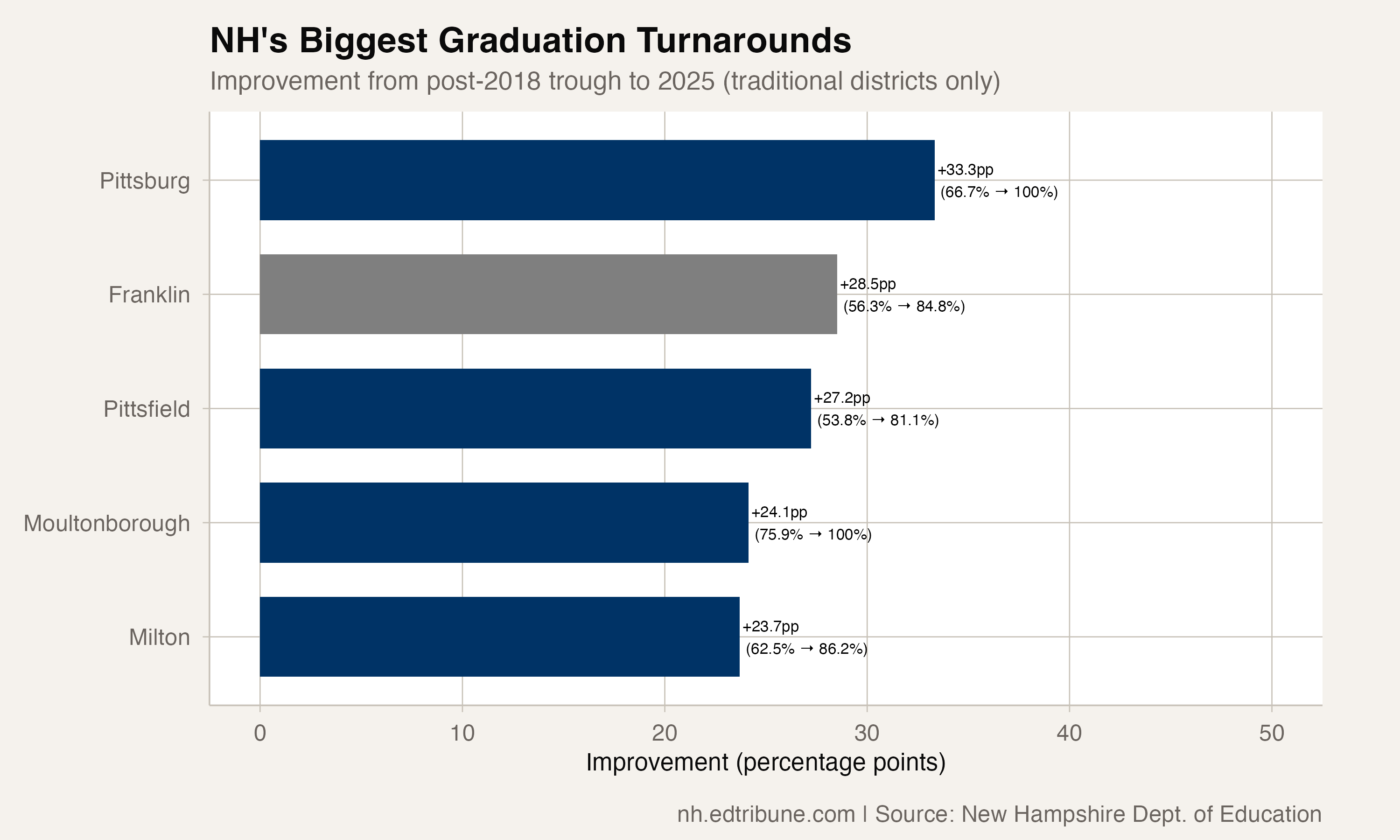
Franklin graduated 84.8% of its Class of 2025, up from a 56.3% trough in 2020, the largest sustained turnaround of any traditional district in New Hampshire.
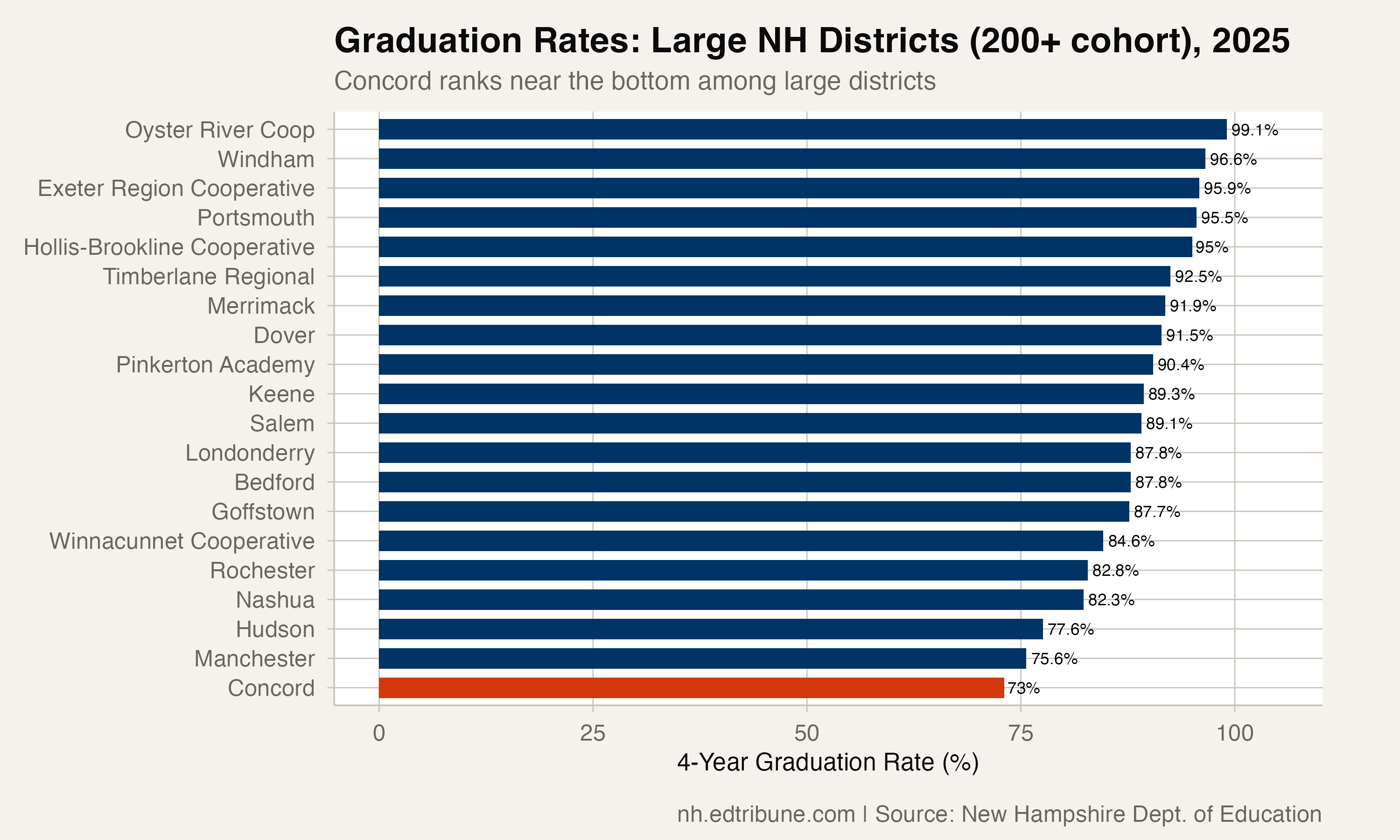
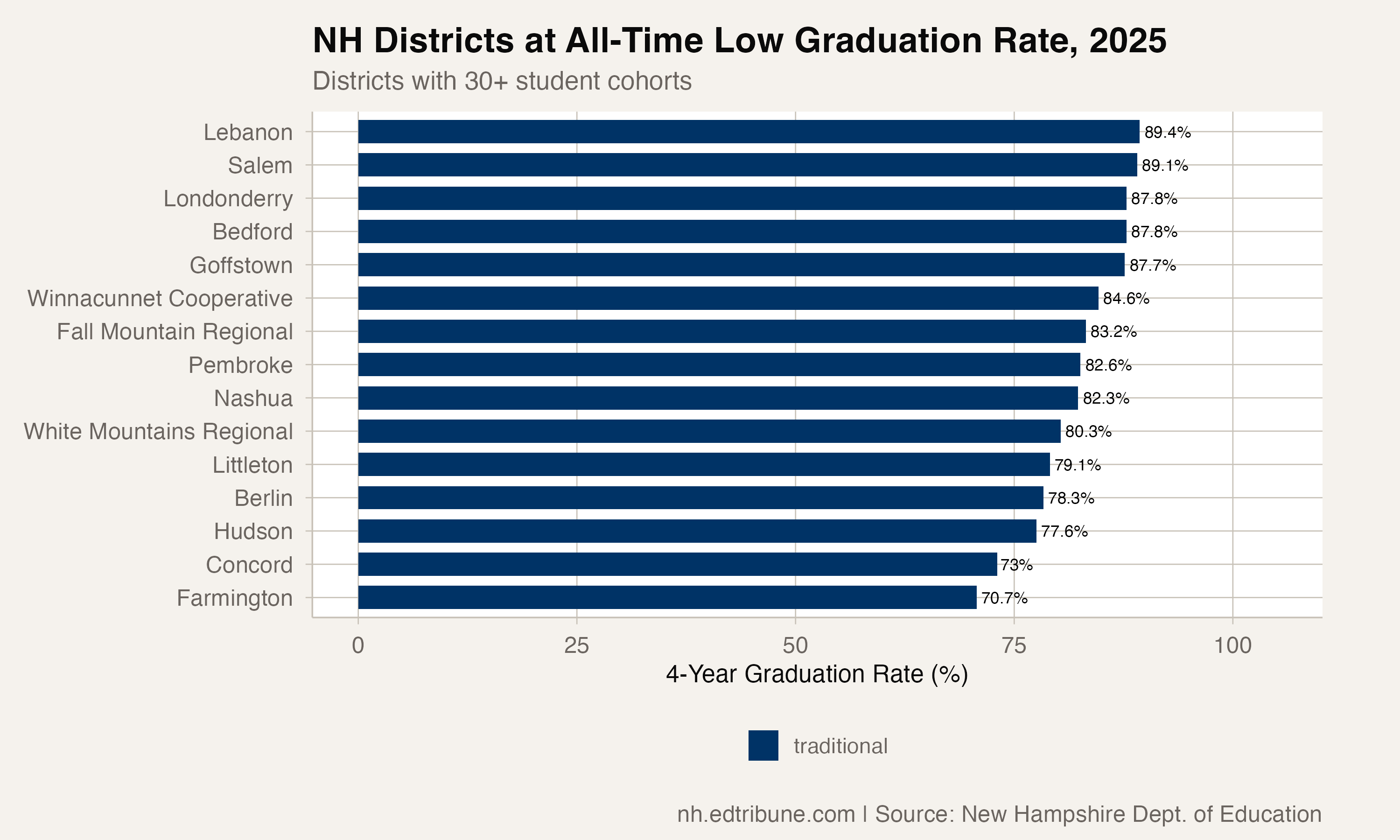
New Hampshire's capital graduated just 73% of its Class of 2025 — an all-time low, and for the first time, below Manchester.
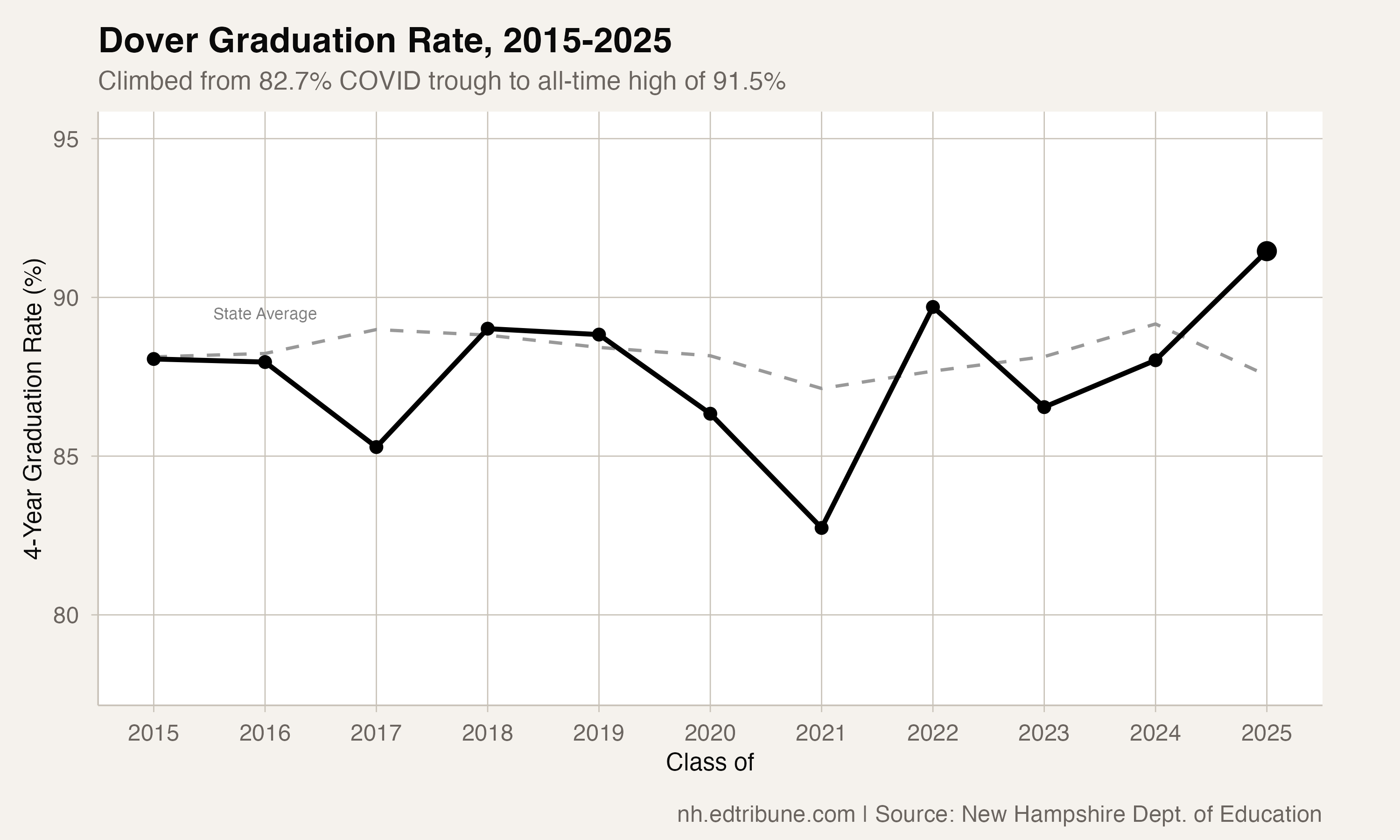
Dover graduated 91.5% of its Class of 2025 — an all-time high and the only large district to set a record in a year when 21 districts hit bottom.
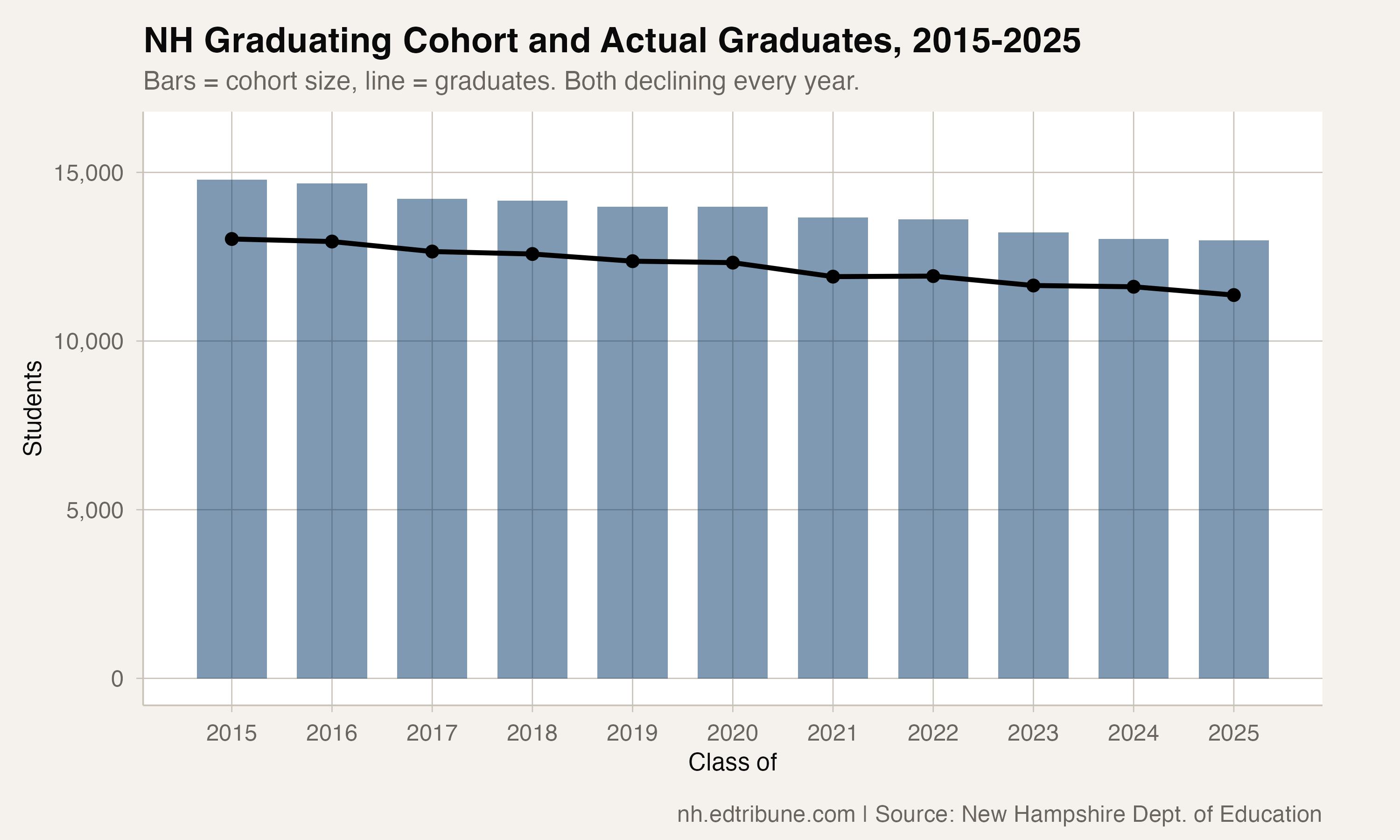
NH's graduating cohort has shrunk every year since 2015, from 14,780 to 12,980 — a 12% decline producing 1,662 fewer graduates annually.
One in five NH districts posted their lowest graduation rate on record in 2025, including the capital, second-largest city, and affluent suburbs.
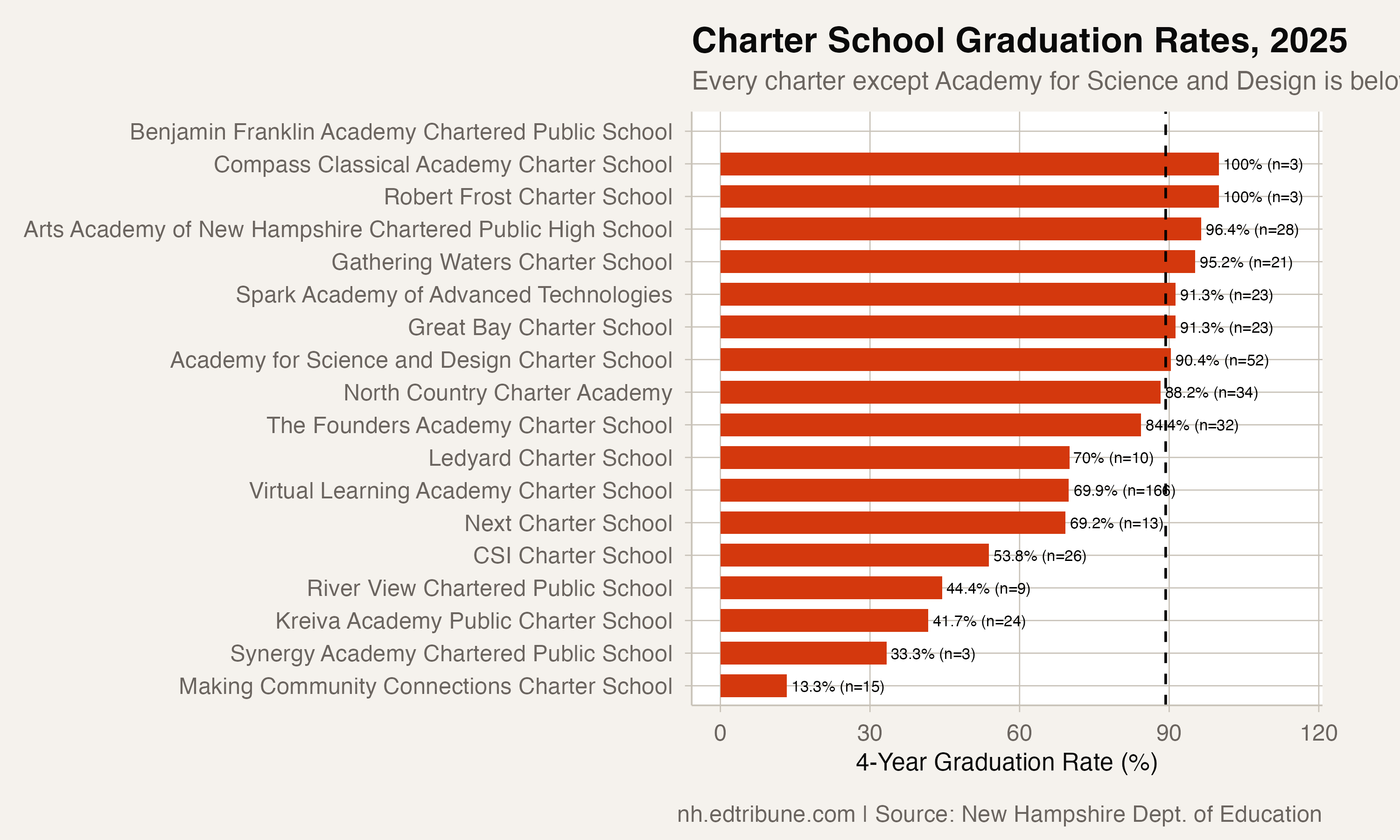
NH charter schools average a 72.5% graduation rate vs. 89.3% for traditional districts. Every district below 70% is a charter.
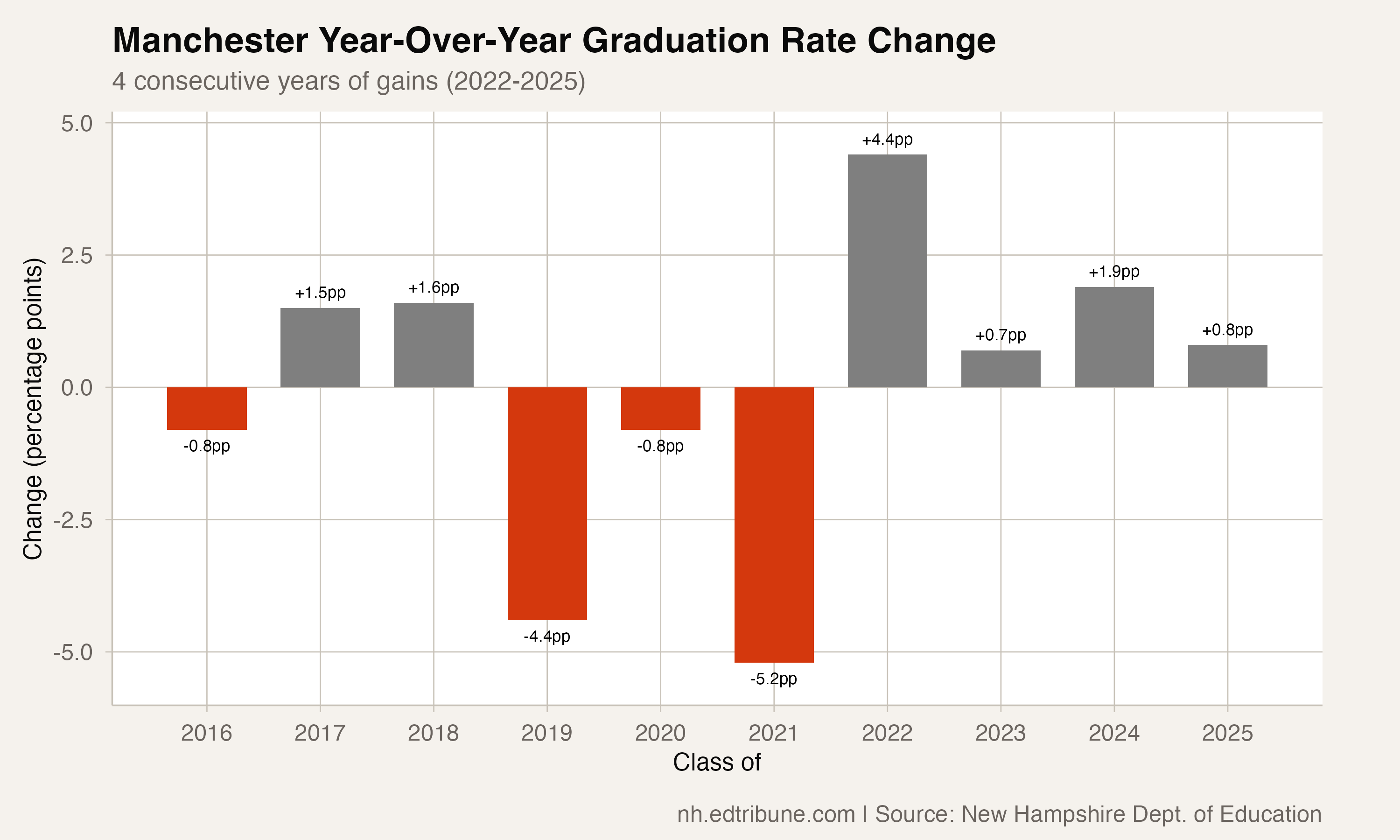
Manchester has posted four consecutive years of graduation rate improvement, climbing from 67.8% to 75.6% — even as the state average fell.
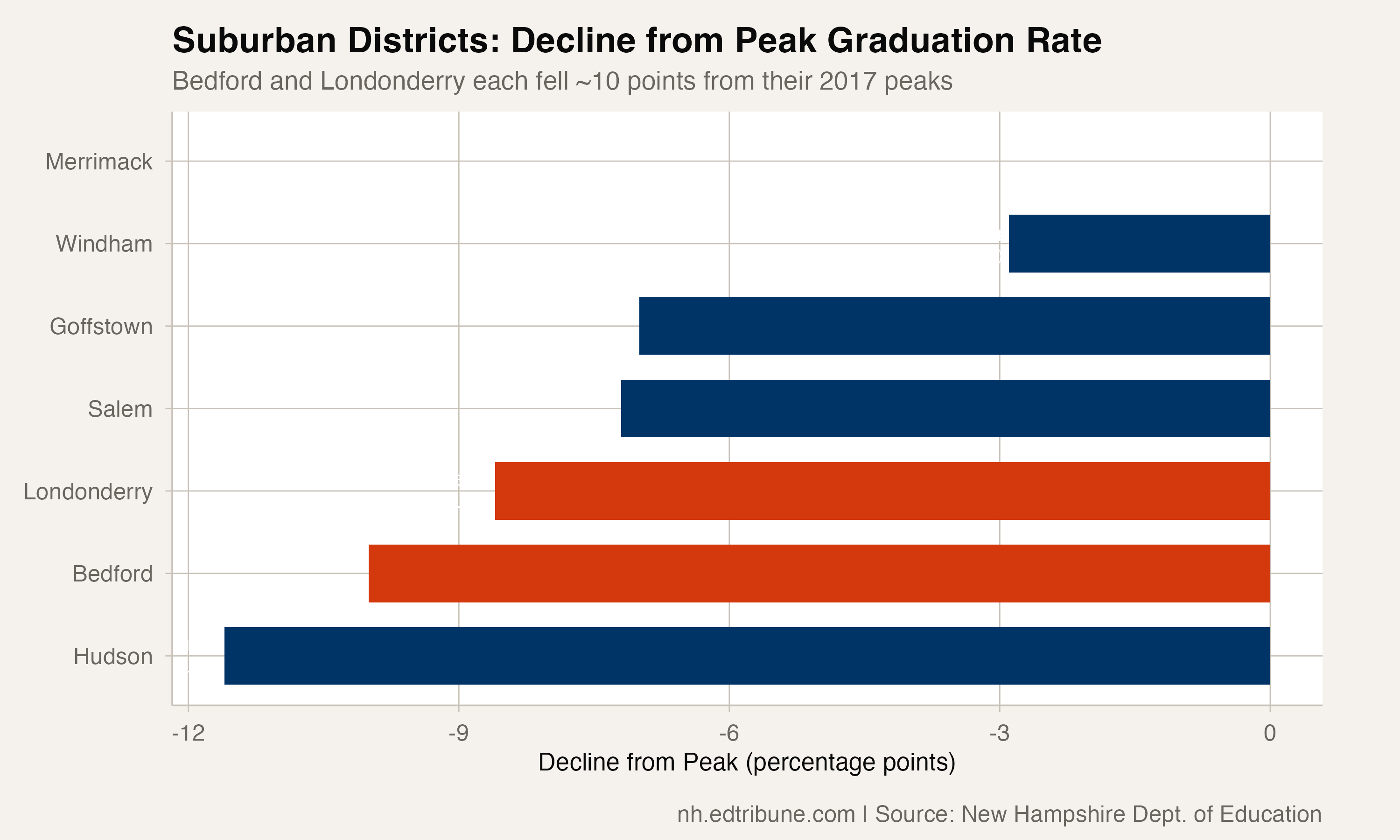
Bedford and Londonderry — two of NH's wealthiest suburbs — both hit all-time low graduation rates in 2025, falling roughly 10 points from 2017 peaks.